


Most people don’t spend much time thinking about the electricity grid. Why would they? They’re thinking about whether they can afford the next bill. And when bills go up, they want to know why.
Recently, we’ve heard claims that renewables are the problem, and that investing in the grid is pushing bills higher. But over the past decade, it is inflation and rising commodity costs that have been responsible for 70% of the increases in energy bills.
Not renewables. Not policy or network costs. The basic fact is that, despite significant investment, gas still provides much of our heating and generates a large share of our electricity. Our energy bills remain strongly linked to gas prices.
Six months ago, with substantial new global gas supply coming on stream, we were convinced bills were going to come down. But the crisis in the Middle East changed that dramatically. Gas prices have doubled and, with every military action around the Strait of Hormuz, the situation is exacerbated.
Despite getting some of the blame, renewables are actually helping us right now. While domestic and business gas prices have risen, the domestic electricity unit rate is at a very similar level to this time last year, and wholesale electricity prices are 30% lower than they would be if we didn’t have renewable power at our fingertips.
That’s because homegrown renewable generation insulates us from international events. Gas prices have less impact on electricity prices when a greater proportion of our power comes from renewable sources.
You can see this play out internationally. Countries with more renewables, such as Spain, have been less buffeted by the Hormuz crisis than those with more gas-fired generation, such as Italy.
Of course, if the Hormuz crisis continues to escalate, there will be an impact on bills everywhere. But the more renewable generation you have, the greater the protection each time there is a gas price surge.
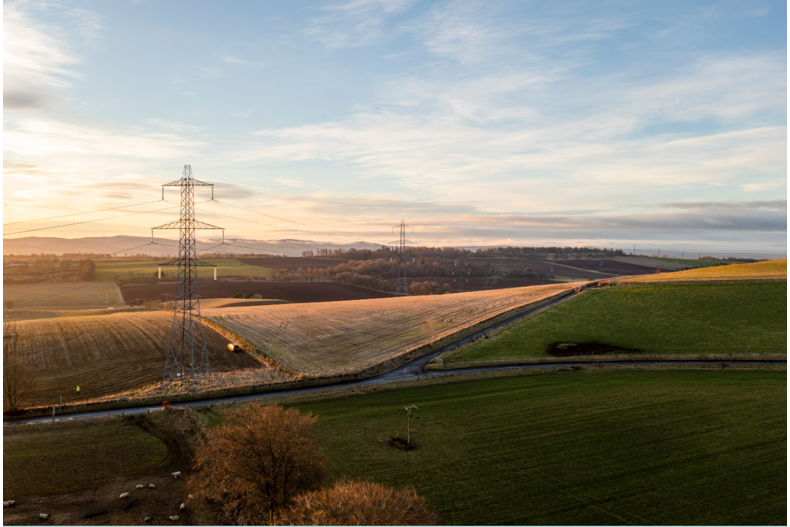
Over the past decade, Britain has located energy generation where the resource is strongest. You build wind farms where the wind blows. But now we need the infrastructure to move that power to where people live and work: from the North Sea, coastlines and hills to homes and businesses across the country. This is where investment in the grid comes in.
As well as connecting renewable generation, the grid must cope with additional demand from electric vehicles, AI data centres and air conditioning. This requires investment and does mean the network element of energy bills will increase for a period while Britain builds the infrastructure our future energy system relies on.
But the return comes quickly. Investment in the network eases bottlenecks and brings an end to the debate about "wasted wind" in a system that cannot always move power to where it is needed.
It is fundamental to making greater use of renewable generation and completing the final piece of the puzzle: the electrification of our economy.
For years, we have tended to think about electricity, gas and petrol as separate costs. Increasingly, people will see them as a single energy bill. Electric vehicles and heat pumps are cheaper to run, so while electricity use may rise, gas and petrol costs can fall away, reducing overall energy spend.
Alongside that comes the benefit of a more efficient energy system, with electricity playing a larger role and the costs of that system shared more widely.
Some argue that bills could be reduced by slowing investment in renewables or the grid. This is misguided. For a new government, it is tempting to look at energy in the middle of a gas crisis and conclude that a radical structural rethink is needed.
If the Hormuz crisis continues, it is undoubtedly true that customers may need support as a sticking plaster to our current situation. But the cure is not huge structural reform. It is holding firm to the direction of travel that successive Labour, Conservative, Liberal Democrat and SNP governments have set out: backing the choices that are providing increasing protection from the volatile world around us.
Finish the job on homegrown energy, add electrification, and we have the only viable recipe for stable, lower prices for all.