


SSE's investment in flexible generation in Ireland
A major milestone has been reached in the construction of SSE’s Tarbert Next Generation Power Station – with the successful marine delivery of the turbine which will sit at the heart of the plant.
The new 300MW power station, located in County Kerry, will run on sustainable biofuels and will provide vital flexible generation to Ireland’s electricity system, particularly at times of low renewables output and high demand.
The project, which represents an investment of up to €300 million, marks the next chapter in the iconic site’s nearly 60-year history of electricity generation, and follows the decommissioning of the original oil-fired plant in 2023.
Construction began in December 2025 with SSE collaborating closely with lead partners Ansaldo Energia and Atlantic Projects Company. Delivery of the turbine, alongside other major operational parts, is a landmark moment for the project, which remains on schedule for completion in late 2027. Around 200 full-time jobs are being supported during the project's construction. Once operational, the day-to-day running of the station will create enduring jobs in the area with the creation of 14 new full-time roles.
How the turbine was transported from Italy to Ireland
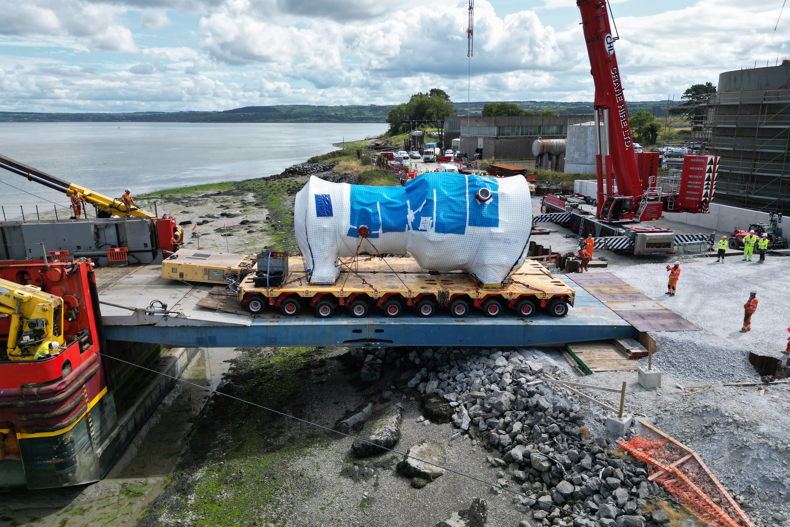
The AE94.3A turbine - manufactured by Ansaldo Energia and weighing 335 tonnes – was transported from Genoa in Italy, before arriving in Foynes and transferring to the Terra Marique heavy lift barge for the final stage of its journey to Tarbert.
Following its voyage from Genoa to Foynes, it arrived at Tarbert on Thursday, where it was finally brought ashore via a specialist beach landing operation adjacent to Tarbert Lighthouse. Measuring approximately 10.94 metres long, 5.18 metres wide and 4.92 metres high, it is the largest single piece of equipment delivered to the project to date.
The delivery represents the first marine landing of heavy generation equipment of this scale undertaken by SSE in Ireland and was designed to minimise disruption to the community.
Charlie Cryans, Director of Construction at SSE Thermal, said: "The successful delivery of the turbine is an important construction milestone for Tarbert Next Generation Power Station. This was an extremely complex marine operation requiring careful planning and close collaboration between SSE, Ansaldo Energia and Atlantic Projects Company. I'd like to thank everyone involved for their professionalism and commitment in delivering the operation safely and for minimising the impact on the local community.
“Once operational next year, Tarbert Next Generation will be pivotal in supporting Ireland’s electricity system during periods of low renewable output, providing vital flexible generation to power homes and businesses across the country.”
Stefano Gianatti, Executive Vice President Thermal New Units of Ansaldo Energia, said: “The successful delivery of the AE94.3A turbine marks an important milestone for the Tarbert project. This achievement reflects the strong collaboration between Ansaldo Energia, SSE Thermal and all project partners, as well as the commitment of the teams involved. We are proud to provide the technology at the heart of a power station designed to operate on sustainable biofuels, and we look forward to continuing our work with SSE as the project progresses towards completion.”
Tim Riordan, Project Director of Atlantic Projects Company, said: "The arrival of the turbine is the result of months of planning and coordination between the project teams and our specialist delivery partners. We're pleased to have successfully completed this important stage of the project and look forward to continuing our work with SSE and Ansaldo Energia as construction progresses."
Why Tarbert Next Generation Power Station matters for energy security
Tarbert Next Generation is one of two new power stations being delivered in Ireland by SSE. In County Meath, construction began in June 2026 on Platin Power Station. Together, the projects represent an investment of up to €600 million in flexible generation capacity designed to strengthen Ireland's security of electricity supply.